How we define each bagging format
The bag is one part of the solution; the complete format also depends on the product it contains and how it will subsequently be handled. We need to know whether the unit is defined by weight, pieces or another specification, the characteristics of the food and how it is grouped. We assess the proposed bag, required closure, identification information and units per box. If your company already has an approved format, provide a sample or specifications for its materials. Where the presentation has yet to be finalised, we can assess its requirements before confirming the operation. We do not assume that the same bag or configuration is suitable for every frozen product.
Bagging linked to labelling and boxing
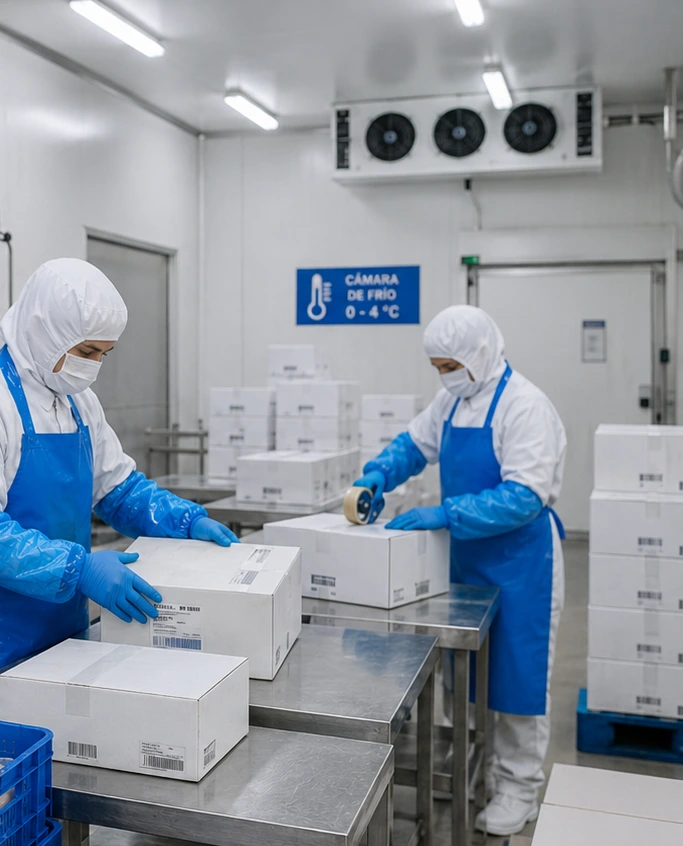
A bagging job may require prior selection or grading and subsequent labelling, boxing and palletising stages. That is why it is important to state the actual condition of the consignment and the product’s destination. Batch identification must be maintained during the change in presentation and linked to the prepared units. Checks on kilograms and the agreed format are also defined for each product reference. If there are several species, sizes or presentations, these must be distinguished in the work order. The expected result is more than product inside a bag: it is a unit prepared for the next stage of your commercial or logistics operation.
Details needed to assess your bagging project
To request a proposal, specify the product and its condition, approximate kilograms, incoming format and desired contents per bag. Include the bag dimensions or specifications, type of identification, number of bags per box and any requirements from the receiving customer. Clarifying who supplies bags, labels and boxes avoids discrepancies when defining the scope. Photos of the product and desired presentation are particularly useful if no technical work specification exists yet. Include the expected receipt date and when you need dispatch. With this information, we can assess the operation and identify any points requiring validation before organising it.
Rebagging: changing the bag requires a product assessment
Rebagging does not simply mean putting an old bag inside another one. If the packaging containing the food needs to be opened, the operation must be assessed in relation to the product’s condition, the material and handling conditions. We need to know why the change is requested, which packaging would be removed and which would be applied. The original information and its relationship to the new format must also be reviewed. The work does not imply changing dates or replacing data without justification and a valid instruction. If the aim only requires changing the outer box, this may be reboxing rather than rebagging. Distinguishing these needs in the enquiry allows us to assess the tasks, materials and checks actually appropriate to the goods.
Preparing several bag sizes or presentations for the same product reference
A consignment may be intended for different presentations, but each variant needs an identifiable instruction. Specify the contents per bag, units per box and the label for each format. Stating the total volume is not enough when several destinations or brands are involved. It must be clear how much is allocated to each version and whether the bags are subsequently grouped differently. Tolerances and checking criteria are defined according to the project specification, without assuming a default range. If the customer supplies materials, their references should be linked to the product they will contain. This preparation allows bagging to be assessed as an organised operation and helps identify the bags and boxes prepared for each order.
Details needed to assess your operation
- Product, condition and batch of the goods.
- Approximate volume and frequency of the work.
- Incoming format and finished presentation.
- Materials supplied and labelling requirements.
- Expected date and delivery conditions.
Frequently asked questions
Can you transfer bulk product into bags?
We can assess bagging a bulk consignment according to the product, its condition and the desired format. We need to know the intended contents per bag, material characteristics and any additional tasks. The proposal is confirmed after reviewing these details and the condition of the goods.
Do I need to supply the bags and labels?
Each project must specify who supplies bags, labels, boxes and other materials. If you have already defined them, send us their specifications or samples so we can review the work. If an element is missing, mention it in your first enquiry so the full scope can be assessed before the service conditions are established.
Does bagging include reboxing the product?
It can be proposed together with boxing, labelling and preparation of the goods, but these tasks must be expressly included in the proposal. Specify how many bags each box will contain, how product references will be identified and the required finished presentation. This allows us to assess the entire sequence and its material requirements.
Can you change the bag on an already packaged product?
We can assess a rebagging requirement, but the product, its packaging and the reason for the change must be reviewed before confirming the work. Send photos of the current bag, batch identification, storage condition and proposed new presentation. Changing the packaging containing the food must be distinguished from simply replacing the outer box. Each case involves different tasks and conditions.
Can several formats be prepared from the same consignment?
This can be assessed if each variant is defined and suitable for the product. Specify the allocated quantities, contents per bag, materials and labels for each version. We also need to know how units will be grouped into boxes and which product references must remain separate. The proposal must describe these differences so preparation of each format can be assessed and the entire volume is not interpreted as a single presentation.
Services that can complete the job
YOUR NEXT OPERATION
What does your product need?
Tell us the service, volume and finished format. We will work with you to assess how to organise the job.